Fairfield Concrete Contractors
Menu
What Causes Concrete Foundation Issues in Fairfield?
Concrete Foundation Repair Fairfield
Environmental factors specific to Butler County’s climate and soil types are the most common causes of foundation issues in Fairfield, OH. The repeated freeze/thaw cycles in Ohio, along with expansive clay soils and seasonal moisture fluctuations, all contribute to stresses on foundations, which ultimately lead to cracks and deterioration over time. Understanding what is causing your foundation damage will enable you to see some of the early warning signs and take preventative actions prior to some small issues becoming large structural problems. A professional assessment of your home or commercial building will identify the cause of the foundation movement, cracking, and deterioration so that we may provide you with a targeted solution to address your concrete foundation repair needs. We believe addressing the cause of the problem, rather than just treating the symptoms, will ensure long-lasting repairs that protect your property value and prevent future foundation issues in the harsh Ohio climate year-round.
Freeze-Thaw Cycle Damage
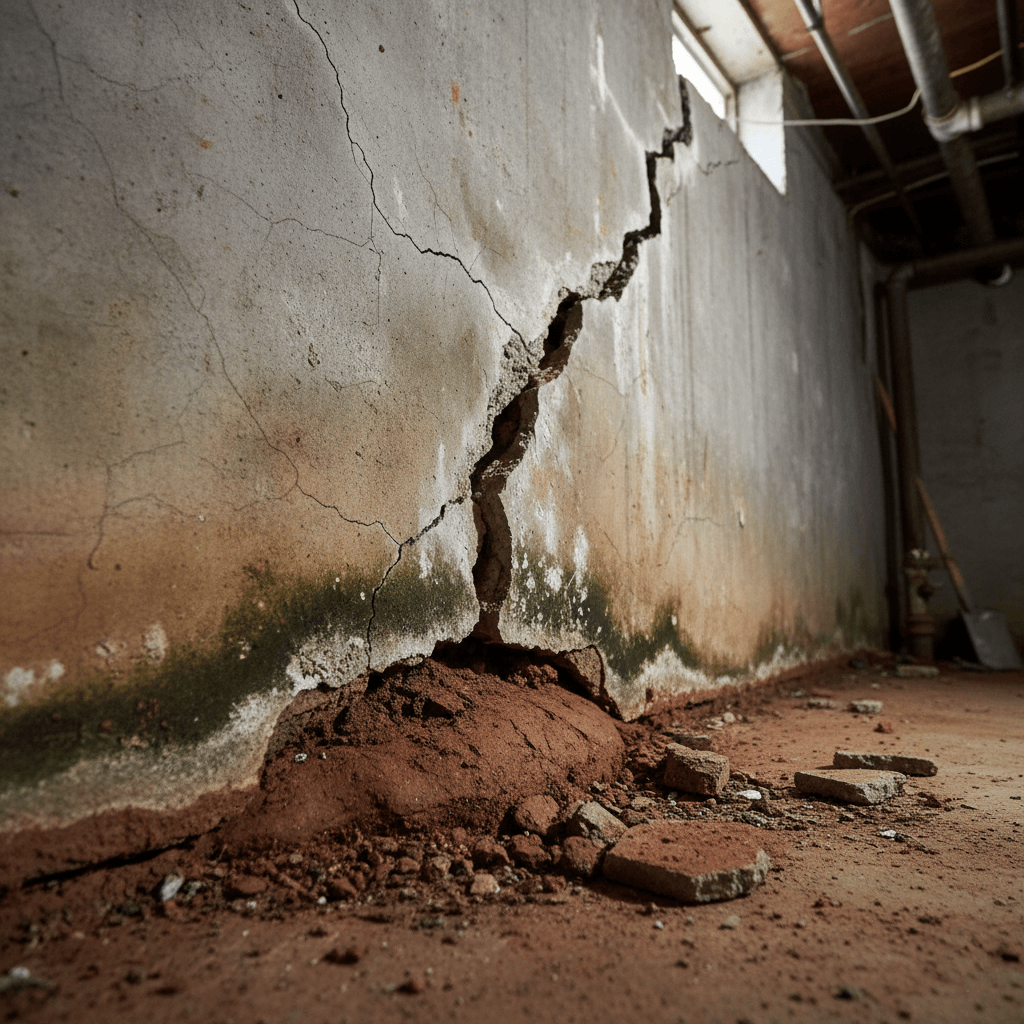
Ohio’s seasonal temperature fluctuations are responsible for creating a repetitive pattern of freeze-thaw cycles, which ultimately damage Ohio’s concrete foundations via expansive forces from expansion-contraction. When water enters small cracks or pores in concrete, the water will expand about 9% when frozen, thereby developing extreme internal pressure within the concrete to widen cracks previously created and develop new ones.
Freeze-thaw damage is caused repeatedly throughout Butler County winters due to the numerous freeze-thaw cycles. Each cycle of the freeze-thaw damage will result in some degree of incremental damage to the foundation structure, and the cumulative effects of this type of damage will occur over time. Foundations constructed using non-air-entrained concrete with poor drainage are at a greater risk of freeze-thaw damage than most other types of foundation damage because they both compromise the structural integrity of the foundation system.
Moisture penetration is conducive to freeze-thaw damage to a foundation when temperatures drop below freezing. Moisture entering the foundation walls through poor drainage surrounding the foundation creates an environment where the freeze-thaw damage will be maximized when temperatures drop below freezing.
Cracks present in the foundation wall serve as entry points for water that will enter the cracks and freeze and expand upon cooling of the water. The expansion of the water will continue until the foundation wall is severely compromised structurally.
Clay Soil Movement
Characteristics of Expansive Clays
As a result of the clay soils prevalent in Butler County, the soils have characteristics that make them extremely responsive to changes in moisture content in the soils. As a result of these characteristics, the soils exhibit large amounts of expansive movement (i.e., lateral movement) in response to the changes in moisture content in the soils. When the soils are saturated with moisture, the expansive soils can generate lateral pressures on foundation structures that can be as high as 5500 lbs/sf.
Movement of Clay Soils
Because the soils are so highly responsive to moisture content changes, the soils move seasonally in response to the changes in the level of the groundwater table. As a result of the movement of the soils, the foundation structures also move and settle unevenly over time. The movement of the foundation structures results in a concentration of stress in areas of the foundation structures that lead to cracking, bowing, and eventual structural displacement.
Seasonal Soil Movement
As a result of the increased moisture in the soils during the spring months, the clay soils expand and exert tremendous forces against the foundation structures. Conversely, as a result of the decreased moisture in the soils during the summer months, the clay soils shrink and pull away from the foundation structures. The pulling away from the foundation structures creates voids beneath the foundation structures, which enables the foundation structures to settle differentially.
Over a period of years, the vertical displacement of foundation structures can be as much as 6-8 inches, resulting in stepped cracks in the basement walls and floors. Because the soils continue to move cyclically, the foundation structures must be repaired in a manner that accommodates the continued movement of the soils while maintaining structural stability.
Hydrostatic Pressure Problems
Effects of Hydrostatic Pressure on Groundwater
High levels of groundwater in Fairfield create hydrostatic pressure against foundation walls that can exceed the structural capacity of older concrete foundations. The hydrostatic pressure creates an upward thrust of water that forces moisture through the foundation walls and contributes to structural failure of the foundation if the drainage system fails.
The hydrostatic pressure is greatly increased during the spring snowmelt and heavy rainfall periods when the soil moisture is at saturation levels. The foundation walls that do not have waterproofing and drainage systems fail to withstand the greatest amount of stress during these peak groundwater periods.
Failure of Drainage Systems
Failure of Perimeter Drainage Systems
Clogged or damaged perimeter drainage systems cause the hydrostatic pressure to build up behind the foundation walls rather than being directed away from the structures. Failure of the sump pump and/or clogging of the drain tile creates a condition that enables the hydrostatic pressure to push the foundation walls inward or contribute to basement flooding.
Lack of Proper Surface Drainage
The concentration of waterono the foundation walls as a result of improper surface drainage around the foundations creates additional hydrostatic pressure problems. Poor grading, clogged gutters, and insufficient downspout extensions direct water toward the foundation walls and contribute to increased stress on the foundation walls.
Settlement and Soil Instability
Issues with Settlement of Backfill Soils
Improperly compacted backfill soils around new foundations will settle over time and remove the lateral support that the foundation needs to maintain stability. This settlement will allow the foundation walls to move outward due to soil pressure while creating voids that encourage additional settlement of the foundation.
Techniques of construction that do not include proper soil compaction during backfilling create long-term problems with foundations as the soil naturally settles under its own weight. Basements require special compaction techniques to prevent settlement-related movements of the foundation.
Poor Bearing Capacity of Soils
Foundations built on soils with inadequate bearing capacity experience differential settlement as the underlying soils are compressed under the applied load of the structure. Soil bearing capacities that are inadequate are typically the result of building on organic soils, loose fill materials, and poorly prepared construction sites.
Problems related to poor bearing capacity of soils typically become evident years after the completion of construction as the foundations settle differently and create structural stress throughout the building. Professional soil testing during the initial phases of construction eliminates many foundation problems prior to placing the concrete by identifying unsuitable bearing conditions.
Construction and Design Factors
Inadequate Reinforcement
Foundations built many years ago with little to no reinforcement do not possess sufficient structural capacity to resist the soil loads and environmental stresses that exist today. Prior to modern building codes were adopted, it was permissible to construct foundations with a low level of reinforcement that would prove to be inadequate for the long-term performance in difficult soil conditions.
Compared to foundations that are properly reinforced, unreinforced concrete foundations are more susceptible to cracking and structural displacement as a result of thermal stress, soil movement, and hydrostatic pressure. Repair techniques for older foundations should incorporate the addition of reinforcement to address structural deficiencies while providing repairs to the foundation.
Construction Quality Issues
Poor concrete mix design, inadequate curing procedures, and construction shortcuts taken during the installation of foundations create weaknesses that can be identified as foundation problems years later. Weaknesses in the foundation due to poor concrete mix design, inadequate consolidation of the concrete, and premature loading of the foundation compromise the structural integrity of the foundation from the onset of construction.
Construction defects such as cold joints, honeycombed concrete, and insufficient concrete cover over reinforcement provide entry points for moisture and corrosion. These initial quality problems accelerate the degradation of the foundation and necessitate comprehensive repair approaches that address all deficiencies.
Environmental and Age Factors
Deterioration of Concrete over Time
Reactions that occur within the concrete continue for many years after the concrete has been placed. As a result of these reactions, the properties of the concrete and the structural capacity of the foundation system are gradually changed. Processes that occur in the concrete include carbonation, alkali-silica reaction, and other chemical processes that decrease the strength of the concrete and increase its porosity over time.
Aging of the concrete and the subsequent deterioration of the foundation are accelerated when the foundations are subjected to repeated cycles of moisture, freeze-thaw cycles, and chemical interactions with the soil. Environmental conditions in Butler County create optimal conditions for deterioration of the concrete and therefore require active maintenance and repair.
Tree Root Damage
Roots of Trees Near Foundations
Trees adjacent to foundations can create multiple problems, including root pressure against foundation walls, removal of moisture from soils, causing settling of the foundation, and physical damage to drainage systems. Mature oak, maple, and other trees common in Fairfield can have root systems that extend far beyond the canopy of the tree and impact the stability of the foundation.
Roots of trees grow towards the foundation walls in search of moisture and nutrients that are found in the foundation walls as a result of irrigation and moisture from the building. Roots of trees can penetrate the cracks in the foundation walls, displace the drainage systems, and create voids in the soils that provide less support for the foundation.
Fairfield Concrete Contractors provides comprehensive concrete foundation repair services for the residents of Butler County. We diagnose problems that exist in the foundation systems, provide repair techniques that are specific to the challenges of the soil and climate of Butler County, and provide long-lasting solutions to the problems associated with the foundation systems.
LATEST POSTS