Fairfield Concrete Contractors
Menu
Fairfield Concrete Resurfacing vs Overlay Explained
Concrete Resurfacing Fairfield
Understanding the differences in concrete resurfacing and concrete overlays is critical to help you, as a homeowner, determine what will be the most beneficial option for your specific surface needs. While both options allow you to restore a damaged or worn-out concrete surface (without having to replace it entirely), the purpose of each is slightly different, and therefore, the application methods are as well. The cost associated with both options differs, as does the expected longevity of each. A professional assessment is required to determine whether either method is suitable for your particular type(s) of damage and the intended use of the area in question. Careful selection of the appropriate option will provide you with the best possible results at an optimal price point for the life cycle of your walkway/patio/driveway, as well as maximize the potential value of your investment in the harsh climate conditions experienced here in Fairfield. Properly applying smart materials will result in durable enhancements to the functionality and aesthetics of your improved surface area.
A Better Way to Restore Your Outdoor Living Space
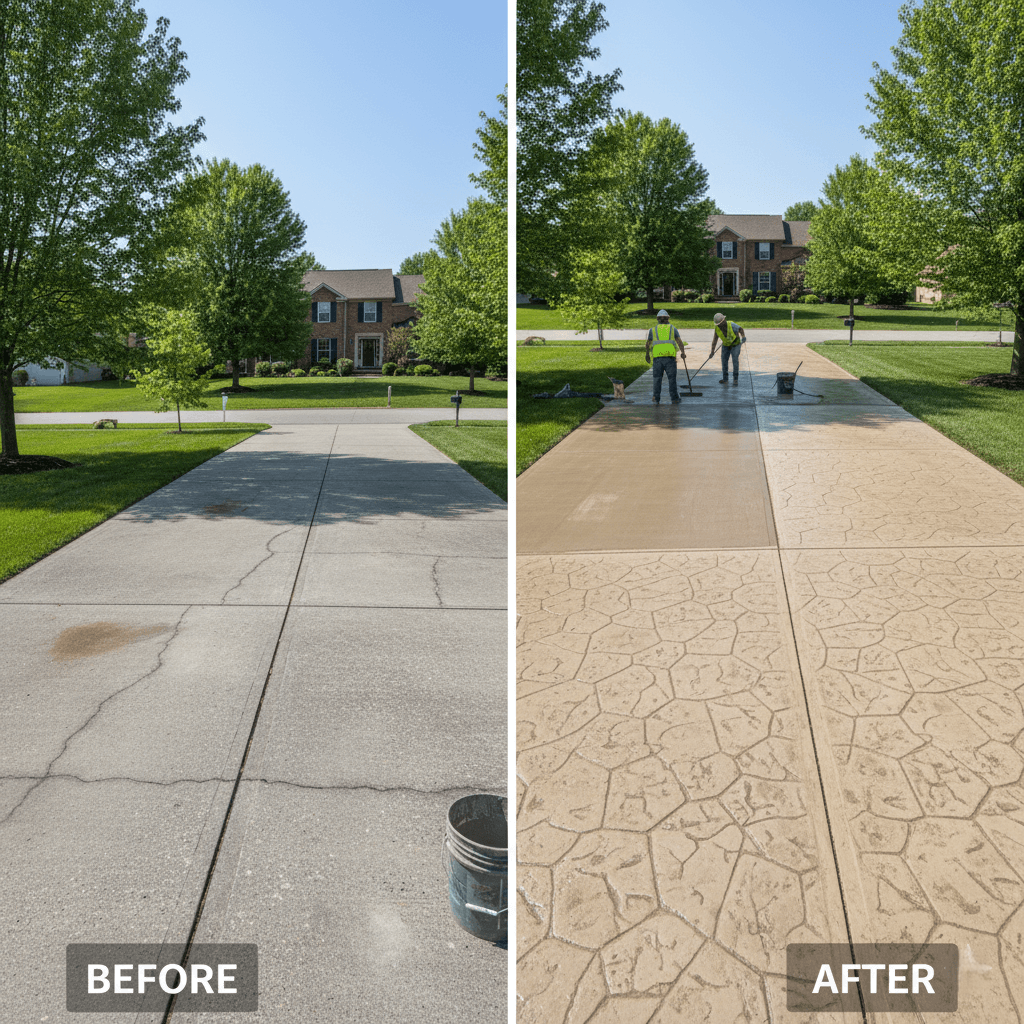
Fairfield Concrete Contractors offers the ultimate solution for damaged or worn-out outdoor living spaces: concrete resurfacing and overlays. For many homeowners, these two processes are often confused with one another, but they each serve different purposes and come with varying costs. In this article, we will explore how to determine which process is right for you, the benefits of each, and what type of restoration can be expected.
What Is Concrete Resurfacing?
Concrete Resurfacing is a process that applies a very thin layer (usually 1/8 – 1/4 inch) of a specially formulated cement-based overlay to an existing concrete surface. This process is perfect for surfaces that have minor cosmetic damage, such as small cracks, stains, and minor surface imperfections. The thin nature of this product creates a smooth surface over the original damage.
How Does The Process Work?
To begin the process, our trained technicians clean and prepare the existing concrete surface to ensure that no dirt, oil, or other contaminants affect the bonding agent in the new resurfacing material. Next, any minor cracks or imperfections in the existing surface are repaired before applying the new resurfacing material. Once the new resurfacing material has been applied, our technicians will apply a sealer to protect the new surface from the elements.
What Type of Products Are Used in Resurfacing?
Quality resurfacing products contain Portland Cement, Polymer Modifiers, and Fine Aggregates that form strong bonds with the existing concrete surface. The polymer modifiers provide the flexibility and durability necessary for the harsh freeze-thaw conditions found in Ohio. Advanced resurfacing products also come in self-leveling formulas that create a smooth, even surface with little to no additional finishing work required.
Advantages and Disadvantages of Resurfacing
Resurfacing is generally the most affordable option for homeowners who need to restore their concrete surface. It is also a faster process, usually taking only a day or two to complete. However, resurfacing does not address deeper structural issues such as large cracks, spalling, and uneven surfaces. If your concrete has these types of problems, resurfacing alone will not solve them.
What Is a Concrete Overlay?
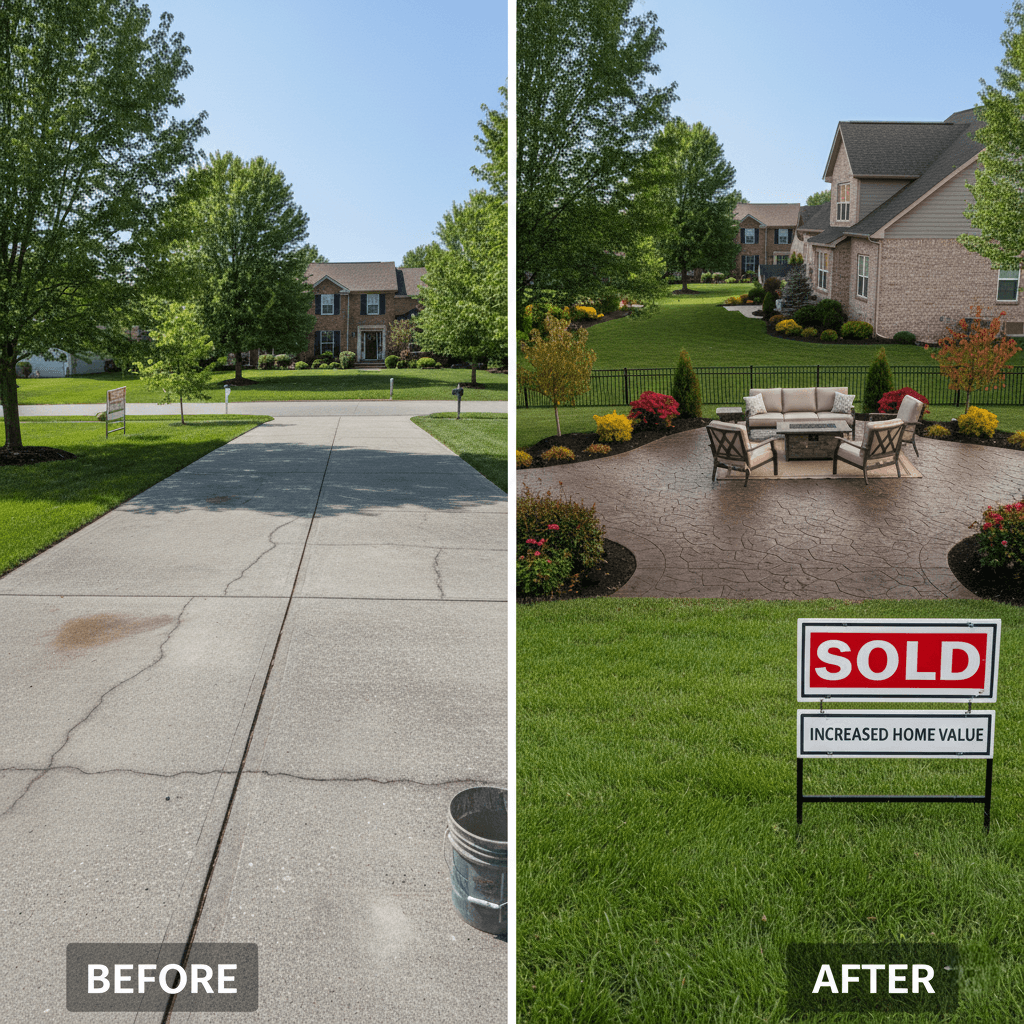
A concrete overlay is a process that involves applying a thicker layer of a specially formulated cement-based material to an existing concrete surface. This process is used to repair and restore surfaces that have suffered severe damage, such as extensive cracking, spalling, and uneven surfaces. While resurfacing provides a cosmetic fix, an overlay provides a more permanent solution to your problem.
Benefits of an Overlay
- Increased durability
- Ability to add color and texture to your existing surface
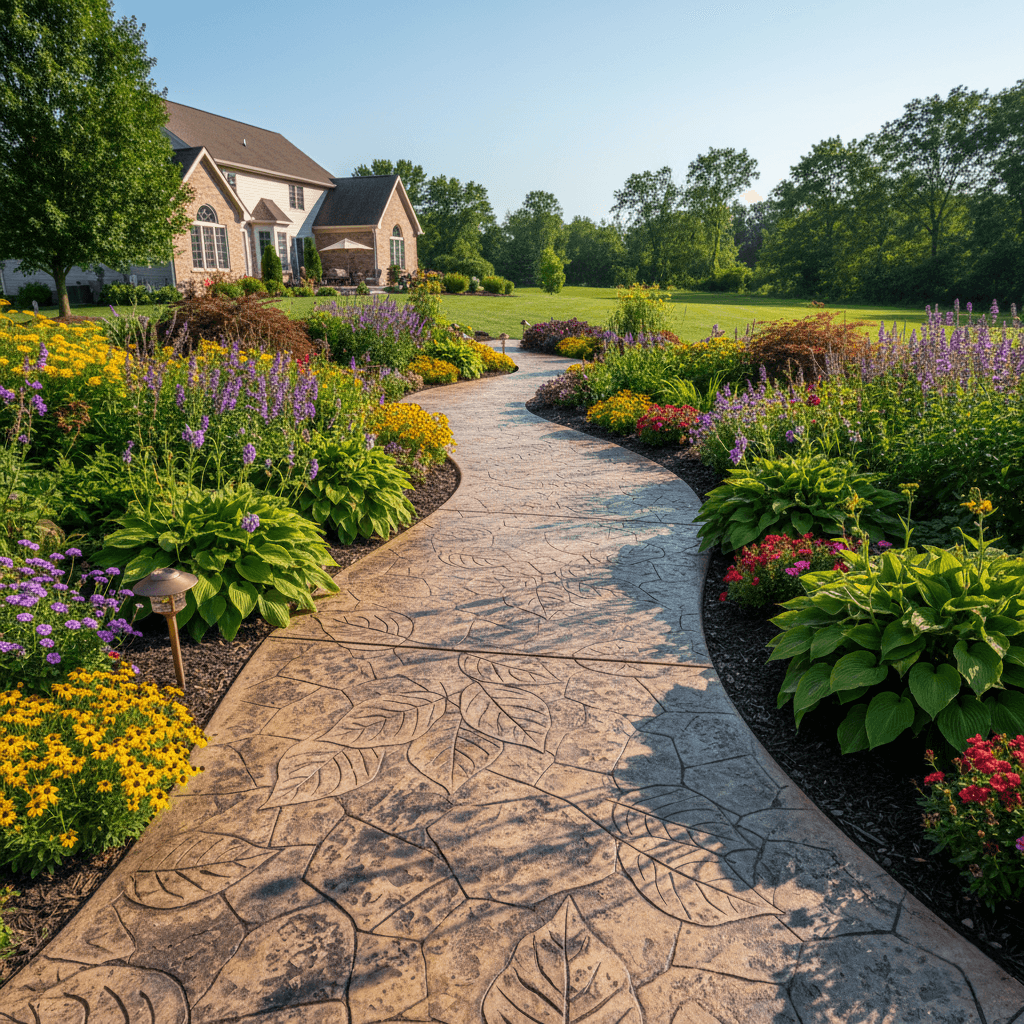
- Option to use decorative designs such as stamped patterns and textures
- Ability to install fiber reinforcement for added strength and stability
- Can be used to completely transform the look and feel of your existing surface
- Provides a more permanent solution to your problem than resurfacing
Disadvantages of an Overlay
While an overlay provides many benefits, there are some disadvantages associated with the process. One of the biggest disadvantages is the cost. An overlay is generally more expensive than resurfacing. Additionally, due to the increased thickness of an overlay, it takes longer to complete and requires more labor and materials.
What to Consider When Choosing Between Resurfacing and an Overlay
When choosing between resurfacing and an overlay, there are a few things you should consider. First, think about the level of damage your surface has sustained. If you have minor cosmetic damage, resurfacing may be the way to go. However, if your surface has suffered more extensive damage, an overlay may be the better choice. Second, consider the level of durability you want your surface to have. If you want your surface to last for a long time, an overlay would be the better choice. Finally, consider the cost. If you are looking for a more affordable solution, resurfacing would likely be the better choice.
Cost Comparison
Resurfacing: $3-$7 per sq. ft.
Overlay: $7-$12 per sq. ft.
High-end overlay: $12-$18 per sq. ft.
Maintenance Requirements
Resurfacing requires regular maintenance to extend its service life and protect it from damage caused by the elements. Sealants will need to be reapplied periodically to protect the surface from stains and damage. Minor repairs may need to be made to the surface from time to time. Failure to perform regular maintenance will result in the surface becoming discolored and stained, and will reduce its service life.
Overlays are extremely low-maintenance. They do not require sealers to be reapplied as resurfacing does, and they are much less prone to staining and damage from the elements. The only maintenance an overlay may require is the occasional minor repair to the surface. However, unlike resurfacing, these repairs are unlikely to occur frequently.
Performance Expectations
Resurfacing: 8-15 Years
Overlay: 15-30 Years
As you can see, overlays far outperform resurfacing in terms of longevity and durability. However, resurfacing is still a great option for those who cannot afford the higher upfront cost of an overlay.
Which Application Method Is Right for You?
If you are looking for a quick, easy, and affordable way to improve the appearance of your existing concrete surface, then resurfacing is likely the better option. However, if you are looking for a more permanent solution to your problem and are willing to invest a bit more money up front, then an overlay is likely the better option.
Ohio Climate Considerations
Ohio’s freeze-thaw cycles place a tremendous amount of stress on concrete surfaces, causing them to expand and contract repeatedly. As a result, any resurfacing or overlay application used in Ohio must be specifically designed to withstand this type of abuse. Products containing air-entraining agents and polymer modifiers provide the best protection against freeze-thaw deterioration. Additionally, proper surface preparation is key to ensuring a successful resurfacing or overlay application.
Moisture Management
Both resurfacing and overlay applications must be protected from hydrostatic pressure caused by standing water. This is particularly important in the Joyce Park area of Fairfield, where hydrostatic pressure is a major concern. A comprehensive moisture barrier system must be installed under all resurfacing and overlay applications to prevent delamination failures.
Warranty Protection
All of the work performed by Fairfield Concrete Contractors comes with a 100% satisfaction guarantee. We are so confident in the quality of our work that we back every project with a warranty that protects your investment. Whether you choose resurfacing or an overlay, you can rest assured that your investment is protected.
Why Choose Fairfield Concrete Contractors?
Our company is dedicated to providing customers with the highest level of customer service and quality craftsmanship. Our staff of professionals has the training and experience to help you make informed decisions regarding your concrete restoration project. From evaluating the extent of damage to recommending the best course of action, we are here to help you get the job done quickly and efficiently.
Whether you are a homeowner or business owner, you can count on us to treat your property as if it were our own. Contact us today to schedule a free consultation and let us show you why we are the premier concrete restoration company in the Butler County area.
LATEST POSTS