Fairfield Concrete Contractors
Menu
6 Signs You Need Concrete Repair in Fairfield
Concrete Repair Fairfield
The ability to recognize early indicators of concrete deterioration can help Fairfield homeowners deal with problems before those problems become costly and potentially catastrophic structural problems that will require a full replacement. Ohio’s environmental conditions are particularly challenging when it comes to affecting the durability of concrete due to freeze/thaw cycles, expansive clay soils, and varying moisture levels; as such, Butler County is particularly vulnerable to stresses on the surface of concrete. Prompt action to correct problems identified through a professional evaluation of these warning signs will allow homeowners to maintain the structural integrity of their homes while minimizing the cost of repairs. Homeowners who understand what to look for are able to determine the most effective time to perform maintenance and develop a plan for the repair of their home. Early detection and prompt corrective action will eliminate small surface problems from becoming large structural problems that could jeopardize the safety of occupants, in addition to the value of the property.
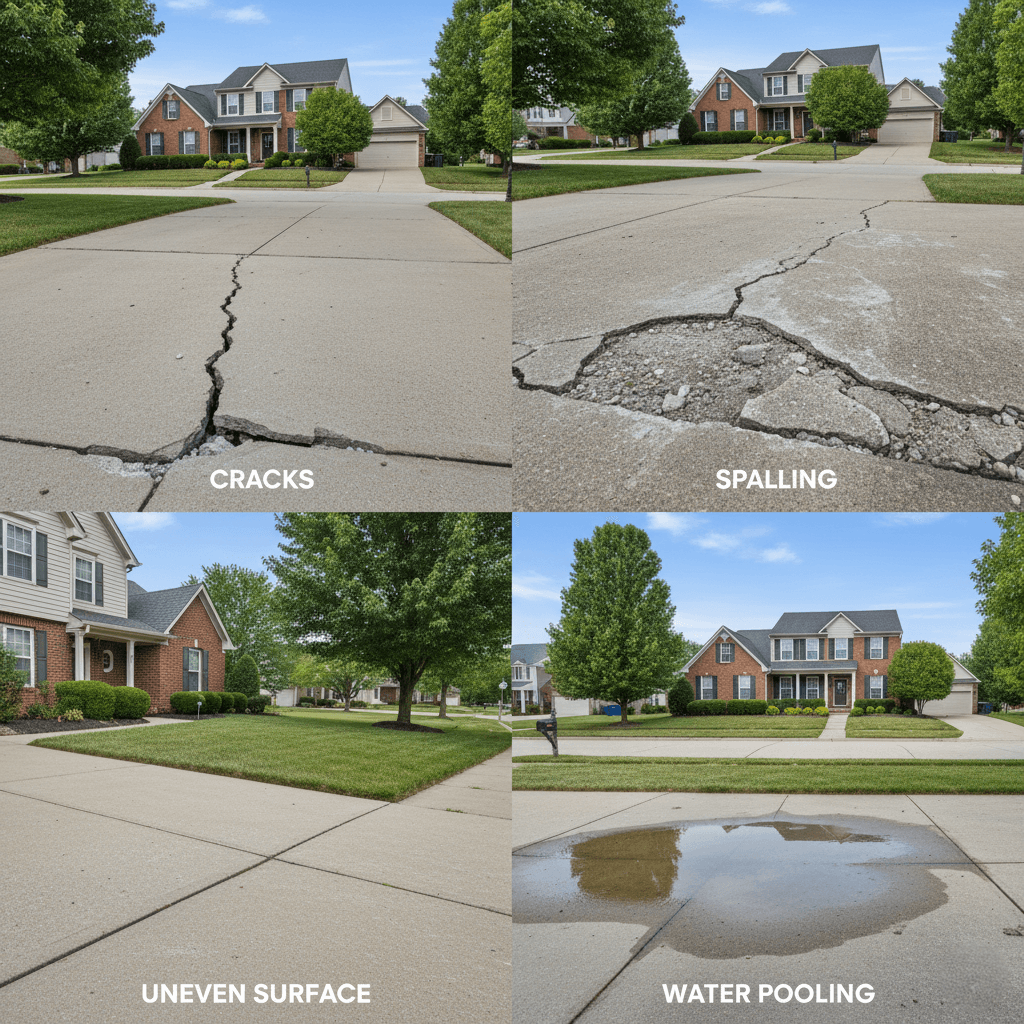
1. Visible Cracks in Concrete Surfaces
Cracks in concrete can be an indication of a need for professional evaluation and/or repairs. Although small hairline cracks may seem insignificant, they often show that there is an underlying problem that needs to be addressed immediately, so that it does not develop further due to seasonal weather conditions in Fairfield.
Depending upon the size of the crack, Butler County homeowners will have varying degrees of concern regarding their concrete repair needs. Hairline cracks generally measure less than 1/16″ in width and are typically the result of concrete shrinkage during its initial curing phase or minor settlement, whereas structural cracks (which measure greater than 1/4″) would indicate more severe foundation or soil-stability problems.
Several types of cracks exist within concrete:
- Although settlement cracks in concrete typically run diagonally across the concrete surface, they are usually indicative of soil movement beneath the concrete slab. In many cases, settlement cracks will open up further during the wet season as the clay soils expand and contract, which ultimately places additional stress on the concrete’s structural integrity over time.
- Map cracking is a pattern of interconnected cracks resembling a spider web across the concrete surface. Map cracking is typically the result of freeze/thaw damage or alkali-silica reaction, which will need to be diagnosed by a professional. Map cracking is indicative of widespread degradation of the concrete and may require the replacement of large portions of the damaged concrete as opposed to a repair.
2. Spalling and Surface Deterioration
Understanding Spalling Damage
Spalling is when the top layer(s) of the concrete begin to chip, flake, or peel off from the underlying structure, exposing the aggregate and providing a rough, uneven surface. Spalling is typically a result of repeated freeze/thaw cycles that cause the water in the concrete pores to continually expand and contract over the course of Ohio’s winters.
Surface Scaling Is the Initial Stage of Spalling
When the first layer of concrete separates from the main body of the structure, this is known as surface scaling. Surface scaling is typically a result of poor finishing techniques or inadequate air entrainment in the concrete mix at the time of placement. If left unrepaired, surface scaling will continue to deteriorate until it eventually leads to deeper spalling that will compromise the structural integrity of the concrete.
Progressive Damage Patterns
The typical progression of spalling damage is to start at the edges and joints of the concrete surface, where water is allowed to infiltrate and contribute to freeze/thaw damage. The presence of moisture in Butler County’s varied temperature environment will accelerate this process, especially in locations with poor drainage that will consistently saturate the concrete surface.
If spalling continues, it will expose the reinforcing steel to moisture and oxygen, which will lead to corrosion of the steel. Once the steel corrodes, it will create internal pressure that will further accelerate the deterioration of the concrete. At this point, it is imperative to contact a professional contractor to assess the situation and take corrective actionbeforeo complete structural failure.
3. Uneven or Sunken Concrete Sections
Settlement Issues
When concrete surfaces are uneven, it is typically an indication of either soil settlement or wash-out that has compromised the structural stability of the area and created a potential hazard for Fairfield property owners. Elevation changes typically result from insufficient compaction of the soil at the time of original placement of the concrete or subsequent movement of the soil due to moisture variation.
Washed Out Areas Will Typically Result in a Sunken Concrete Section
Where the supporting soil beneath a slab has been washed out, allowing the concrete to settle into a lower position, sunken concrete sections will typically be found. Due to the expansive nature of Butler County’s clay soils, they tend to experience significant pressure variations, affecting both the structural stability of foundations and other concrete structures attached thereto.
Identification Methods
Elevation differences between adjacent concrete sections can typically be identified visually. Additionally, walking on the surface may produce hollow sounds, indicating voids below the settled areas. Professionals will conduct assessments to determine if the settlement was caused by soil issues, drainage problems, or structural deficiencies that may dictate different repair strategies.
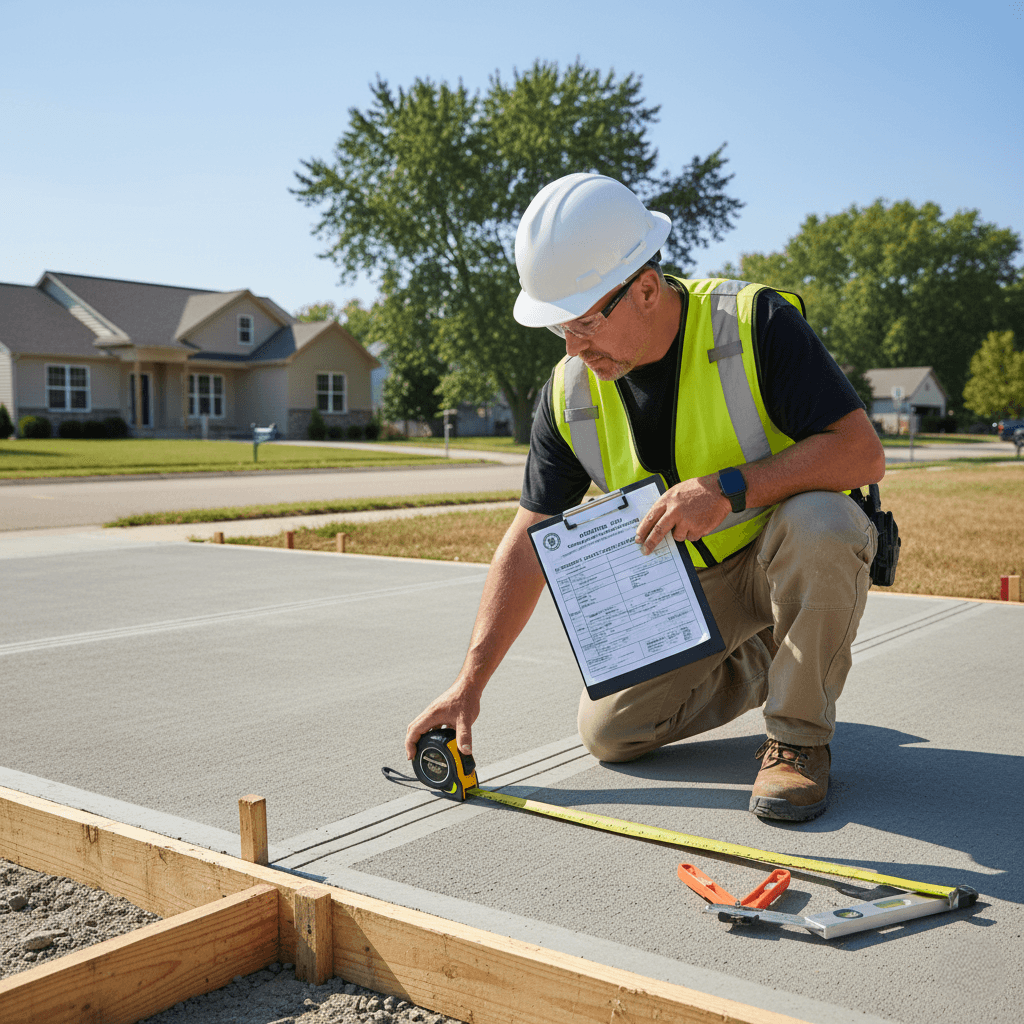
Measurement Tools Will Be Used to Quantify the Amount of Settlement and Determine the Best Approach for Repair
In addition to visual observation and walking assessments, measurement tools will be utilized to quantify the amount of settlement and to assist in determining the best approach for repairing the affected area. Typically, if the settlement exceeds 1″, a professional assessment should be conducted to determine the underlying reason for the settlement and to avoid future occurrences.
4. Standing Water and Drainage Problems
Water Accumulation Issues
Standing water on concrete surfaces is typically an indication of poor drainage that will accelerate deterioration through freeze/thaw cycles and chemical exposure that are common in Ohio’s changing temperatures. Adequate slope in the design of the concrete will ensure that water runs freely away from structures, preventing pools of water from forming on the surface of the concrete.
Butler County experiences frequent and excessive rainfall that will require effective management of water to minimize accelerated concrete deterioration and structural damage. Long-term effects of standing water include a reduction of concrete strength by 20-30% as a result of chemical reactions that break down the cement paste over time, and create the perfect environment for freeze/thaw damage to cause cracking, spalling, and continued deterioration of the structural integrity of the concrete.
Poor drainage also contributes to soil instability that can compromise the support structure of the concrete, which leads to settlement, cracking, and uneven surfaces that will require expensive repairs. Prevention of ongoing damage while preserving your investment in concrete infrastructure is attained by correcting drainage problems.
5. Discoloration and Staining
Surface Staining Patterns
Discoloration of concrete surfaces is typically an indication of an underlying issue that requires a professional assessment and potentially a repair. Efflorescence is indicated by white, chalky deposits on the surface of the concrete. Efflorescence is produced by water migrating through the concrete, breaking down salts and depositing them onto the surface as the moisture evaporates.
Rust Stains Are Usually Indicative of Corrosion of the Embedded Steel in the Concrete
Typically, rust stains indicate that the steel has begun to corrode as a result of water and oxygen penetrating the concrete to the steel. Corrosion of the steel creates internal pressure that accelerates cracking and spalling and will require immediate repair to prevent structural collapse.
Chemical Damage Indicators
Stains appearing yellow or brown are typically a result of chemical reactions occurring between the components of the concrete and environmental contaminants such as de-icer chemicals that are applied frequently throughout the winter months in Fairfield. Chemical reactions compromise the strength and durability of the concrete over time.
Oil/grease stains will not only affect the appearance of the concrete but also penetrate into the concrete and create environmental conditions that will accelerate the degradation of the concrete through chemical interactions. Cleaning and sealing the surface by a professional contractor will help to prevent future damage from these contaminants.
6. Foundation Movement Signs
Structural Movement Indicators
Movement of a foundation typically displays itself through various forms of damage to the surrounding concrete structure. Attached walkways, patios, and driveways will exhibit cracks running along the perimeter of the attached concrete sections as a result of movement of the underlying foundation structure. Butler County’s expansive clay soils create extreme variations in pressure that can negatively impact both the structural integrity of foundations and the attached concrete structures.
Doors and windows that stick or do not close properly may be an indication of foundation settlement that has created unstable conditions within the connected concrete structures on the property.
Interconnected Problems
Movement of a foundation typically impacts multiple concrete elements simultaneously, creating complex damage to the structures that will require coordinated approaches to repair. Delaying repair of damage to concrete structures that are impacted by a moving foundation will allow for increased complexity and expense to repair the damage over time.
Professionals will assess whether the damage to the concrete is a result of foundation movement, soil problems, or some other factor that will dictate the necessary repair approaches. Immediate repair will prevent progressive damage to the structures, protect your property value, and maintain the structural integrity of the concrete.
For comprehensive concrete repair services that address underlying causes while restoring structural integrity and appearance, Fairfield Concrete Contractors provides expert diagnosis and proven repair solutions designed specifically for Butler County’s challenging climate and soil conditions.
LATEST POSTS